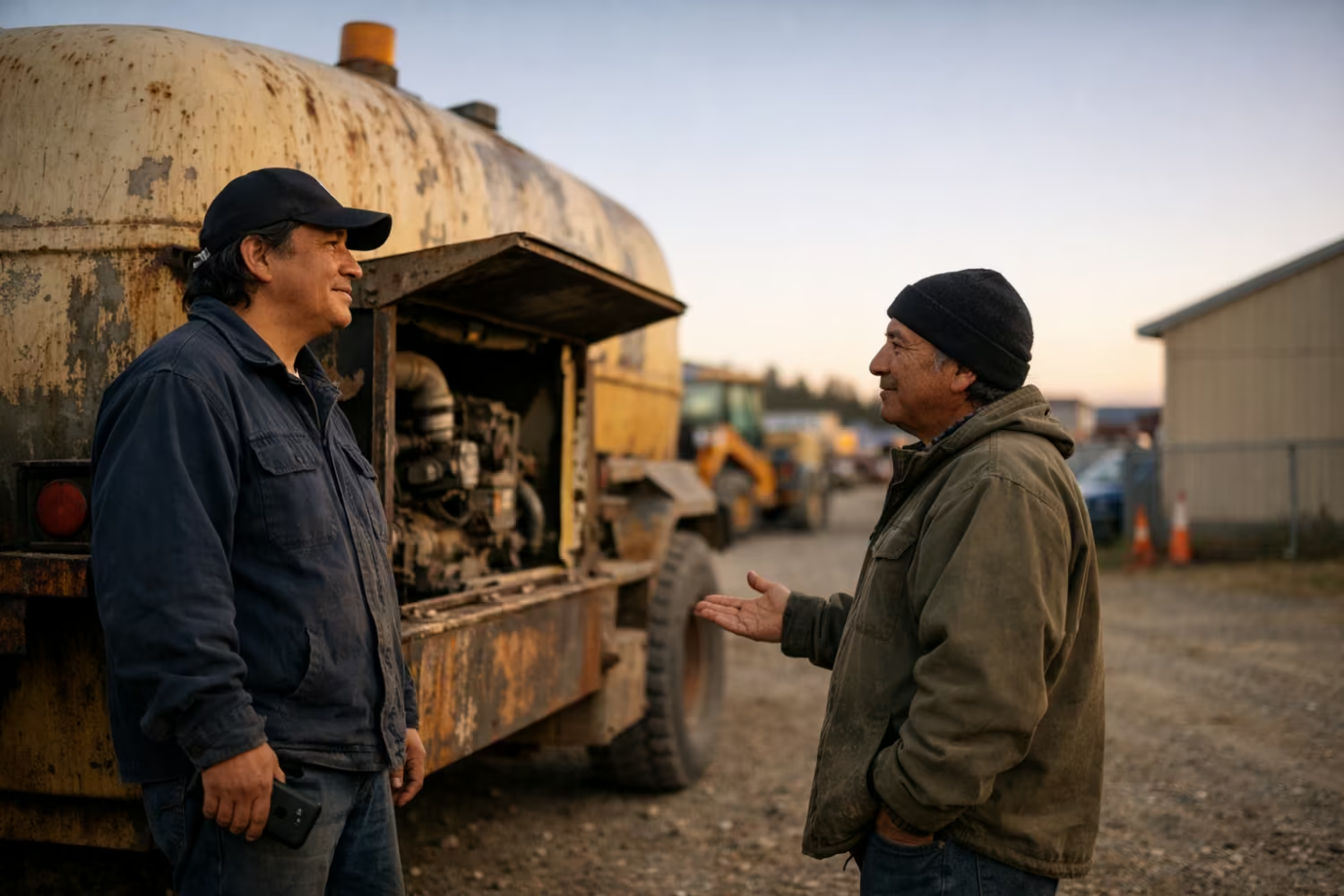
Walk around many First Nations communities and you'll see it: equipment sitting idle.
A truck that hasn't moved in two years. A loader with an issue nobody's diagnosed. A bus that was parked "temporarily" and never got back in service.
That equipment represents capital—money that's tied up in assets that aren't serving the community. But it doesn't have to stay that way.
Yes, you can trade in your old equipment. And if you're not ready to trade, we can help you figure out if it's worth repairing.
How Trade-Ins Work
If your community has equipment you're no longer using—or equipment you want to upgrade—you have options:
Option 1: Trade toward a new purchase
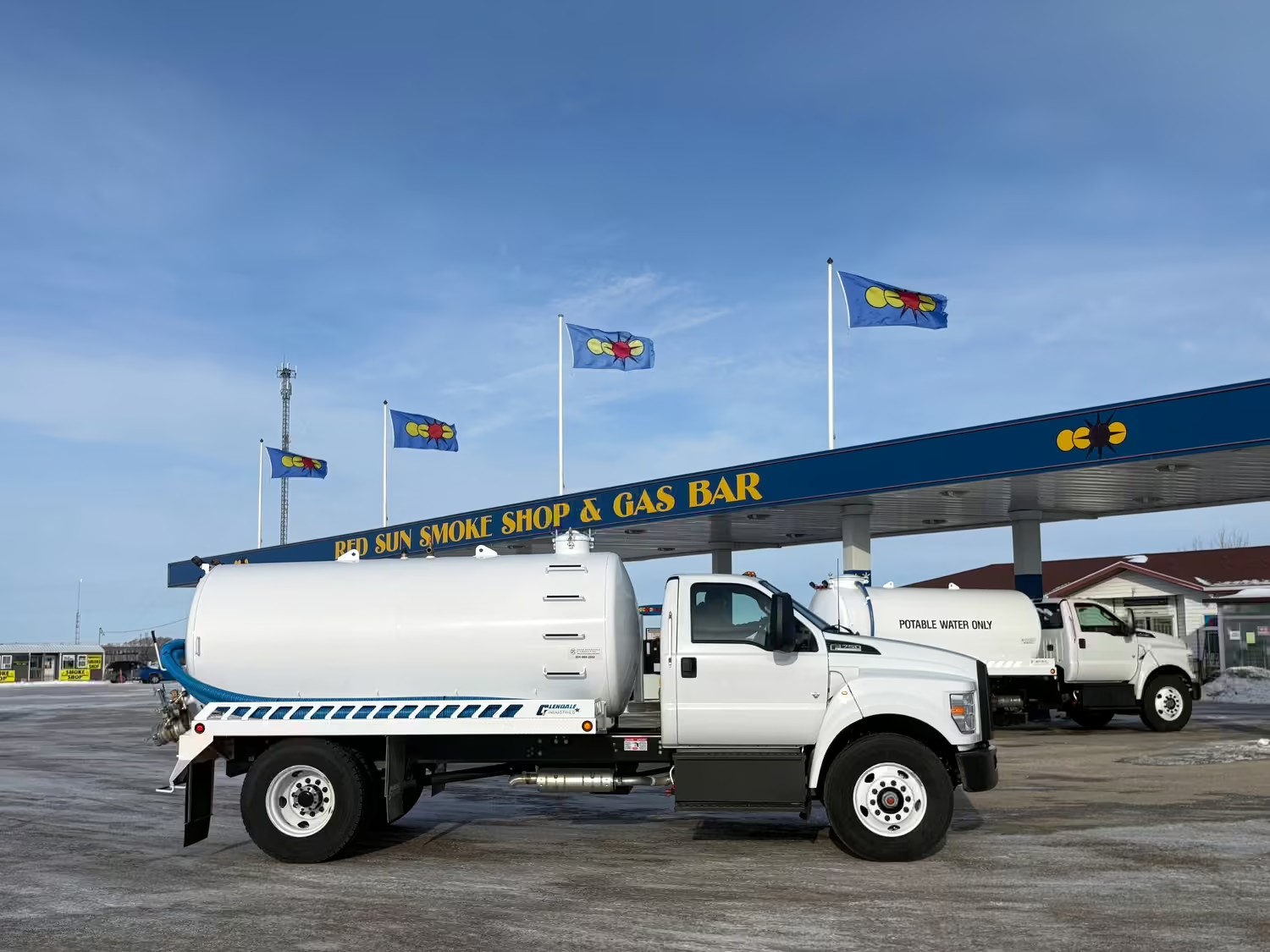
Apply the value of your old equipment toward something new. If you're buying a new water truck, the trade-in value of your old one reduces what you owe.
Option 2: Sell outright
If you don't need new equipment right now, you can still sell what's sitting unused. That frees up capital for other community priorities.
Option 3: Get it assessed first
Not sure what's wrong with that equipment that's been sitting? We can assess it and diagnose the issue. Then you'll know: Is it worth repairing? Or should you trade it in?
What Kind of Equipment Can Be Traded?
We work with a wide range of equipment:
- Trucks — water trucks, septic trucks, dump trucks, fuel trucks
- Heavy equipment — graders, loaders, backhoes, excavators
- Buses — school buses, motor coaches, transit vehicles
- Trailers — flatbeds, equipment trailers, fuel trailers
- Other vehicles — pickup trucks, service vehicles, ATVs
If it has wheels or tracks and it's sitting in your community, there's a good chance it has value.
The Sitting Equipment Problem
We see this a lot:
A piece of equipment breaks down. The community doesn't have the capacity to diagnose it. Nobody's sure what's wrong or how much it would cost to fix. So it sits.
Months pass. Then years. The equipment deteriorates further. Eventually, it's written off as "not worth dealing with."
But here's the thing: That equipment might still have significant value.
- It might need a repair that costs a few thousand dollars—and then be worth $30,000 or more
- It might have parts that are valuable even if the whole unit isn't
- It might be exactly what another community is looking for
The only way to know is to assess it.
How Assessment Works
If you have equipment sitting in your community and you're not sure what to do with it, here's the process:
Step 1: Contact us
Tell us what you have—year, make, model, general condition, and what symptoms it was showing when it was parked.
Step 2: Transport for assessment
If you have a flatbed or can arrange transport, bring the equipment to us. (For some situations, we may be able to send someone to your community.)
Step 3: Diagnosis
We'll assess the equipment and identify what's wrong, what it would cost to repair, and what it's worth in current condition.
Step 4: Decision
With that information, you can decide:
- Repair it and put it back in service
- Trade it toward something new
- Sell it as-is
The goal: Turn idle assets into value—either operational equipment or capital for other priorities.
Why Trade-Ins Make Sense
1. Maximize limited budgets
Every community works with limited funds. If you can apply trade-in value to a new purchase, you stretch those dollars further.
2. Clear out what's not being used
Equipment that sits and deteriorates is losing value every year. Trading it in captures that value while it still exists.
3. Simplify your fleet
Fewer idle assets means less to track, less to store, and less clutter in your yard. Focus on equipment that's actually working for your community.
4. Create opportunities for others
Equipment you're not using might be exactly what another community needs. We repair serviceable units and make them available to communities looking for affordable options.
Common Questions
What if the equipment doesn't run?
That's fine. We assess non-running equipment all the time. We need to know what's wrong, but "it doesn't start" isn't a disqualifier.
What if we don't know what's wrong with it?
That's what the assessment is for. You don't need to diagnose it yourself—just get it to us.
What if it's really old?
Age matters, but so does condition and demand. Some older equipment is still valuable because parts are needed or because it's a model that's still in use.
What if we want to keep using it?
If the assessment shows it's worth repairing, we can do the work and return it to service. Trade-in isn't the only option.
Does transport have to happen during winter road season?
For communities with winter road access only, yes—equipment would need to come out during the winter road window. Plan ahead.
Take Inventory of What's Sitting
Before the next budget cycle, walk your community's equipment yard. Make a list:
- What's sitting unused?
- How long has it been there?
- Does anyone know what's wrong with it?
- Is it taking up space that could be used for something else?
That list is a starting point for a conversation about what to do with those assets.
Ready to Discuss Trade-In Options?
If you have equipment sitting in your community—whether you want to trade it, sell it, or just figure out if it's worth repairing—we're here to help.
Have questions? Let's talk.
Contact Us | 431-430-1115