When equipment fails in a remote community, the typical response is to call for outside help. Fly in a mechanic. Ship out the equipment. Wait for someone else to fix the problem.
But what if your community could handle more of that work internally?
Building internal capacity for equipment maintenance doesn't mean becoming a full-service repair shop.
It means having the people, tools, and knowledge to handle routine issues—so you're not dependent on outside help for every problem.
The Case for Internal Capacity
The proactive approach is always the best solution. Preventing problems through regular maintenance is cheaper and less stressful than emergency repairs.
But when something does fail, the question becomes: Do we have the capacity in-house to solve this problem?
That's one of the things we always encourage communities to consider. Can you bring some of this maintenance and service work in-house? Can you build capacity so your team can provide solutions to common problems?
We're not talking about major repairs.
Engine replacements, transmission rebuilds, complex hydraulic work—that's specialized. Those jobs should go to qualified technicians with the right equipment.
But routine maintenance and troubleshooting?
Oil changes, filter replacements, belt inspections, fluid top-ups, basic diagnostics—these are things community members can learn to do.
And when your team can handle the basics, you reduce downtime, save money, and build skills that benefit the community long-term.
What Can Be Handled In-House?
The goal isn't to do everything—it's to do the routine work that currently requires outside help.
What Does Capacity Building Look Like?
1. Identify community members with mechanical aptitude
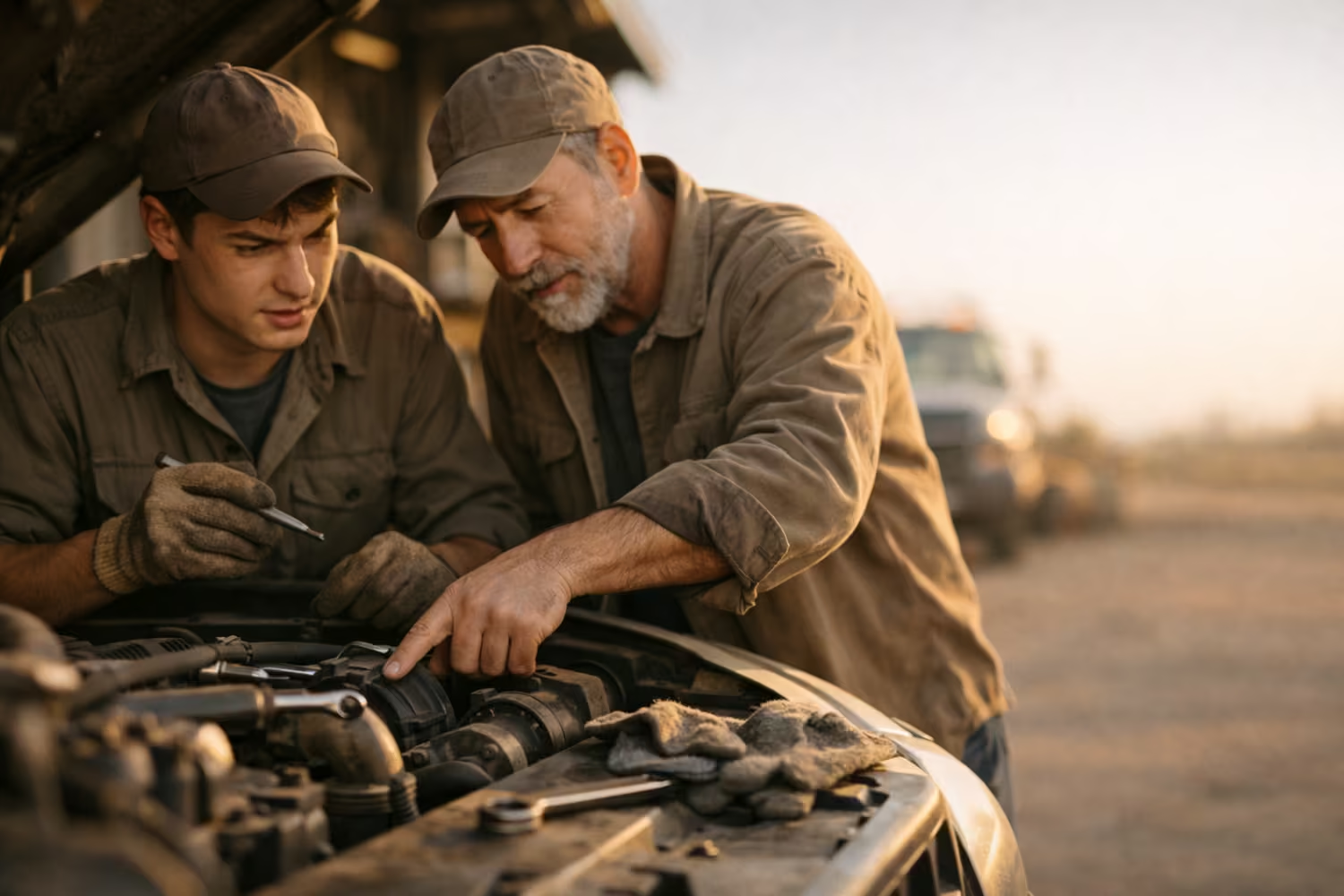
You may already have people in your community who work on personal vehicles, ATVs, or snowmobiles. That mechanical knowledge transfers to larger equipment with training.
2. Invest in training
When equipment is delivered, training should be part of the package—not just operation, but basic maintenance. We include operator training with equipment purchases and can arrange additional maintenance training.
3. Equip your team with the right tools
You don't need a full shop. But having basic tools, a diagnostic scanner, and a clean workspace makes a difference. Stock common parts and consumables so your team can act quickly.
4. Create maintenance schedules
Routine maintenance works best when it's scheduled, not reactive. Create a calendar for oil changes, filter replacements, and inspections. Assign responsibility to specific people.
5. Build relationships for backup
Even with internal capacity, you'll need outside support sometimes. Having a relationship with a partner like us means you have someone to call when problems exceed your team's capabilities.
The Benefits of Internal Capacity
1. Reduced downtime
When your team can handle routine issues, equipment gets back in service faster. You're not waiting days or weeks for outside help.
2. Lower costs
Every service call you don't need to make saves money. Flying mechanics to remote communities is expensive. Handling basics in-house keeps those dollars in the community.
3. Community employment
Building capacity means creating skilled positions within the community. Those jobs provide income, build expertise, and keep knowledge local.
4. Faster response to problems
When something breaks, your team can diagnose it immediately. Even if they can't fix it, they can identify the problem accurately—which helps outside technicians respond more effectively.
5. Pride and self-reliance
There's value in being able to solve your own problems. Building internal capacity is about self-determination—communities taking control of their own infrastructure.
What We Do to Support Capacity Building
We don't just sell equipment and walk away. We stay engaged because we know equipment needs to be maintained to serve the community effectively.
1. Training with every purchase:
Operator training is standard. We can also arrange maintenance training to build your team's skills.
2. Remote troubleshooting support:
If your team encounters a problem they can't solve, we can walk them through diagnostics via video call. Sometimes a little guidance is all that's needed.
3. Parts and consumables:
We help communities stock the parts and fluids needed for routine maintenance—so your team has what they need when they need it.
4. Honest assessment:
We'll tell you what can realistically be handled in-house and what should go to a qualified technician. No point in taking on work that's beyond your capacity.
Start Building Capacity Now
If your community wants to reduce reliance on outside services, the time to start is now—not when equipment breaks down.
Talk to your team. Identify who has interest and aptitude. Plan for training. Stock basic parts and tools.
Have questions about building capacity? Let's talk.
Contact Us | 431-430-1115